Breakfast · Algerian
Algerian Baghrir (Semolina Pancakes)
Algerian baghrir recipe for spongy semolina pancakes cooked on one side, with clear batter cues, hole-forming tips and measured butter and honey.
- Prep
- 35 min
- Cook
- 35 min
- Total
- 70 min
- Serves
- 6 breakfast servings (24 small pancakes, about 10–12 cm each)
Cook it
Method
Set out a large bowl, whisk, ladle and a non-stick skillet or griddle. Measure the warm water; it should feel warm rather than hot. Keep the optional additional water aside until after the batter rests.
Whisk the fine semolina, flour, instant yeast and sugar in the bowl. Add the salt and whisk again so everything is evenly distributed.
Whisk the egg into the 960 ml warm water. Pour it gradually into the dry ingredients while whisking until the batter is smooth and fluid, with no pockets of dry semolina. A stick blender can be used briefly if small lumps remain.
Cover the bowl loosely and leave the batter at room temperature for 15–20 minutes, until it looks expanded and bubbly. The exact rise depends on the room temperature; use the visible bubbles rather than the clock alone.
Whisk in the baking powder. Ladle a little batter back into the bowl: it should flow in a steady ribbon and spread by itself into a small round. If it stays in a mound, add the reserved warm water 15 ml at a time; you may not need it all.
Heat a non-stick skillet over medium heat. Brush it with a very thin film of oil, then wipe away any visible puddles. Pour about 70 ml batter for each 10–12 cm pancake, cooking two or three at a time without letting them touch.
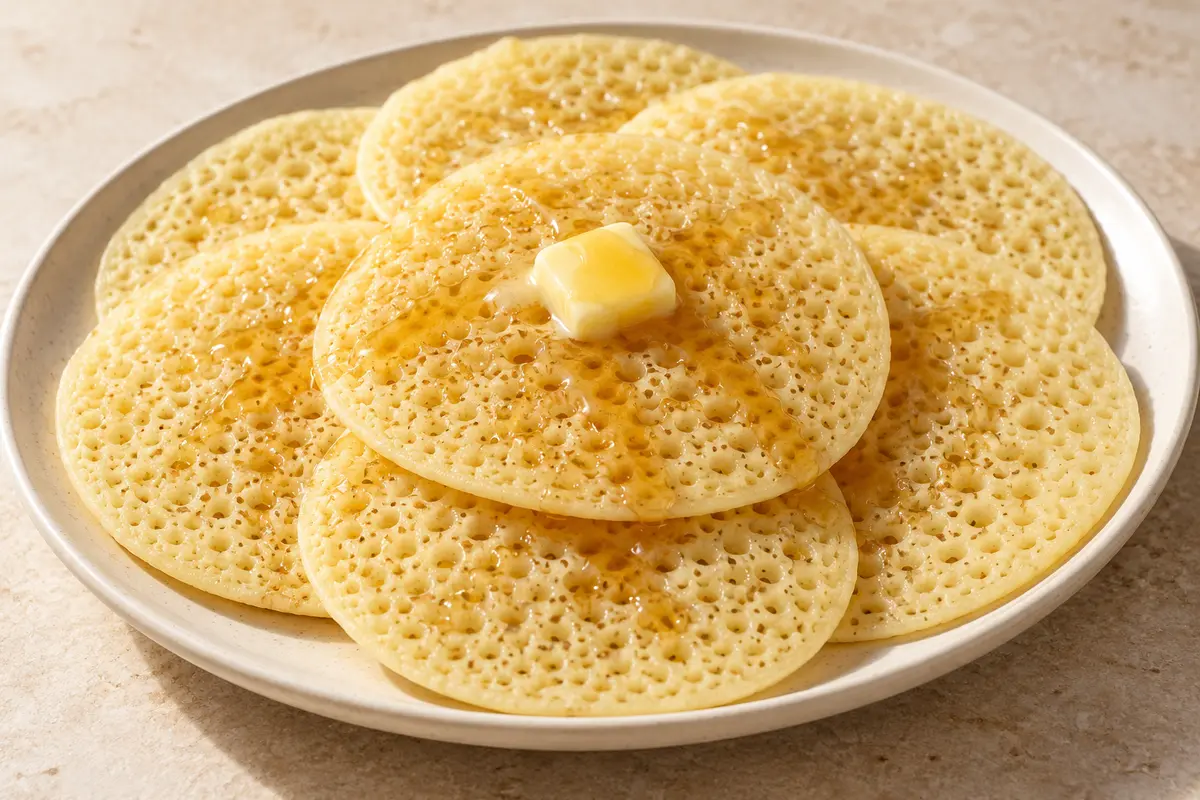
Cook each baghrir on one side only for about 2–3 minutes. Tiny holes should open across the surface, the top should lose its wet shine and the underside should be lightly coloured. Do not flip. If the base browns before the top sets, lower the heat; if few holes appear, see the troubleshooting notes before the next batch.
Transfer the cooked pancakes to a large plate or clean towel in a single layer until steam escapes, then overlap them loosely. Repeat with the remaining batter, stirring gently only if it settles. Serve warm with the measured butter and optional honey.
Make it work
Useful substitutions
- Fine semolina is central to the characteristic texture. Coarse semolina absorbs and cooks differently, so it is not a direct one-for-one substitute; grind it more finely before measuring if that is your only option.
- Active dry yeast may require blooming and can rise at a different rate. Follow its packet directions rather than assuming it behaves exactly like instant yeast.
- For a dairy-free serving, omit the butter and use honey alone or a suitable plant-based spread. Check the spread label if allergens matter.
- This source formula includes egg. An egg-free version would need separate development and is not presented as a verified one-for-one substitution.
Keep it well
Storage and reheating
- Baghrir have their softest texture when served warm on the day they are cooked. Let steam escape before stacking so the hole-filled surfaces do not become wet.
- Do not keep the mixed batter for an extended make-ahead period: yeast activity and baking powder continue to change it. Cook the full batch after the short rest rather than refrigerating raw batter for another day.
- Cool cooked leftovers promptly and refrigerate within 2 hours in a covered container. Following the linked USDA FSIS leftovers guidance, use refrigerated leftovers within 3 to 4 days or freeze them promptly.
- Reheat only the portion needed in a dry skillet over low heat or in short microwave bursts until it reaches 74°C (165°F) throughout. Add butter or honey after reheating.
Recipe notes
Sources and cooking notes
Adapted from the pinned Wikibooks Algerian Baghrir formula. This version preserves the semolina, flour, yeast, sugar, salt, egg, warm water and baking-powder method while adding metric volume conversions, an estimated yield, measured pan oil and serving amounts, visual doneness cues, troubleshooting and storage guidance.
- Cookbook:Algerian Baghrir — Pinned source for the ingredient formula, short rise, baking-powder addition, small-pancake format and one-sided cooking method.
- AI Love Food editorial methodology — Metric conversions, estimated yield and timing, measured cooking and serving amounts, visual cues, troubleshooting and storage guidance.
- FDA: Handling flour safely — Avoid tasting raw flour batter and clean hands, utensils and work surfaces after preparation.
- USDA FSIS: Leftovers and Food Safety — Refrigerate perishable leftovers within 2 hours, use refrigerated leftovers within 3 to 4 days, and reheat leftovers to 74°C (165°F).
- CDC: Foods and Drinks to Avoid or Limit — Honey must not be given to children younger than 12 months because of infant botulism risk.
Cooking tips and troubleshooting
Use the holes as your heat guide
A good batch develops many small holes while the top cooks from the steam below. If the underside colours before the wet patches disappear, reduce the heat. If the pan is too cool, the batter can spread without forming an even spongy surface.
Adjust only after the rest
Semolina hydrates while the batter stands. A mixture that looks thin at first can thicken noticeably, so wait until after the 15–20 minute rest before adding any of the optional water.
Why baghrir are not flipped
The exposed top is meant to stay pale, soft and full of open holes. Cooking the second side would flatten and brown that surface. Remove each pancake only when no wet batter remains on top.
Keep finished pancakes tender
Lay hot baghrir separately for a minute so excess steam can escape. Once they are no longer visibly steaming, overlap them loosely and cover with a clean towel if they must wait briefly.
Plan larger batches by pan space
The 35-minute cooking estimate allows for 24 pancakes cooked two at a time in a skillet, including ladling and transfer. A wide griddle that holds three without touching can finish closer to 25 minutes. The serving calculator scales ingredients but not pan space, so larger batches need a second skillet or extra cooking time.
Recipe source and licence
Adapted by AI Love Food from Cookbook:Algerian Baghrir by Wikibooks contributors (contributor history). This adapted recipe text is available under CC BY-SA 4.0. The image is credited separately.
Adapted from Cookbook:Algerian Baghrir. Retains its semolina, flour, instant yeast, sugar, salt, egg, four-cup warm-water formula, short rise, baking powder and one-sided skillet method. Converts volume measures to practical metric amounts, estimates a 24-pancake yield, measures optional thinning water and pan oil, adds butter and honey serving quantities, and expands consistency, hole-formation, heat-control, storage and safety guidance. The adapted recipe text is licensed under CC BY-SA 4.0; the separately generated image is not copied from Wikibooks.