Dessert · American
Vanilla Butter Cake
Classic vanilla butter cake baked in a 25 cm round tin, with metric ingredients, creaming cues, doneness checks and troubleshooting for 10 slices.
- Prep
- 20 min
- Cook
- 60 min
- Total
- 80 min
- Serves
- 10 slices
Cook it
Method
Heat a conventional oven to 175°C (350°F). Grease a deep 25 cm round cake tin, at least 7 cm deep, and line its base with baking paper. Have the ingredients weighed before you begin.
Beat the softened butter and sugar together until lighter in colour and fluffy, scraping the bowl regularly. Softened butter should yield to gentle pressure but should not be melted.
Beat in the vanilla, then the eggs one at a time. Mix each egg in before adding the next. Scrape the base and sides so no unmixed butter remains.
Whisk the flour, baking powder and salt together. Add the dry mixture in three additions, alternating with two additions of milk. Mix gently after each addition and stop once the batter is evenly combined.
Spread the batter in the prepared tin and level the top. Do not fill the tin more than two-thirds full; if your tin is shallower or smaller, use suitable additional bakeware and expect different baking times.
Bake for about 50–60 minutes, checking from 45 minutes. The centre should spring back lightly and a skewer inserted near the centre should come out without wet batter. If the top darkens before the centre is ready, cover loosely with foil and continue checking.
Let the cake stand in its tin for about 15 minutes, then loosen the edge and turn out carefully onto a rack. Remove the paper and let it cool before cutting into 10 slices. Cooling time is additional to the 80-minute preparation and baking estimate.
Make it work
Useful substitutions
- Vanilla bean paste can replace vanilla extract according to its label directions. The flavour strength varies by product.
- Do not swap self-raising flour directly for plain flour: this formula already contains a measured amount of baking powder.
- Serve plain or add a topping after cooling. Frosting and cream are not included in the quantities, timing or shopping list.
Keep it well
Storage and reheating
- Cool the cake completely before wrapping or sealing it. Covering it while still warm traps condensation and can make the surface sticky.
- For make-ahead portions, freeze the plain, fully cooled cake or individual slices well wrapped. Thaw while covered so the crumb does not dry out. Add cream, custard or other perishable toppings only when serving and follow the topping's own storage guidance.
Recipe notes
Sources and cooking notes
Allow extra cooling time before serving. This adaptation uses the source metric weights and a deep 25 cm round tin. Check the centre before removing the cake from the oven.
- Cookbook:1-2-3-4 Cake — Source ingredient formula and baking method.
- AI Love Food editorial methodology — Specified equipment, measurements, preparation cues and cooling guidance.
- FDA: Handling flour safely — Avoid eating raw flour dough or batter and clean preparation surfaces.
Cooking tips and troubleshooting
Use the metric formula consistently
The original recipe provides both cups and metric quantities that do not all convert consistently. This version follows its metric weights. Mixing some source cup measures with some converted weights would change the balance.
Choose a deep enough tin
A 25 cm round tin at least 7 cm deep provides room for this large batter. The source leaves the pan size unspecified; this is the equipment choice for the adaptation. Avoid overfilling, and check the centre rather than assuming the timer guarantees doneness.
Keep the batter evenly mixed
Room-temperature eggs and milk are easier to combine with softened butter. Alternate flour and milk, scrape the bowl and stop once smooth. Prolonged mixing after flour is added can make the cake less tender.
A darker top can hide an unfinished centre
This is a sweet cake and its top can brown before the middle is done. A loose foil cover slows further browning while the centre finishes. Use the skewer check and let the cake cool before judging its final texture.
If the batter looks slightly curdled
A little curdling can happen when the eggs are cooler than the creamed butter mixture or are added too quickly. Stop beating hard, scrape the bowl, then continue with the planned flour-and-milk additions. Do not add extra liquid or flour beyond the recipe just to chase a perfectly smooth appearance.
Judge doneness in the centre, not by colour
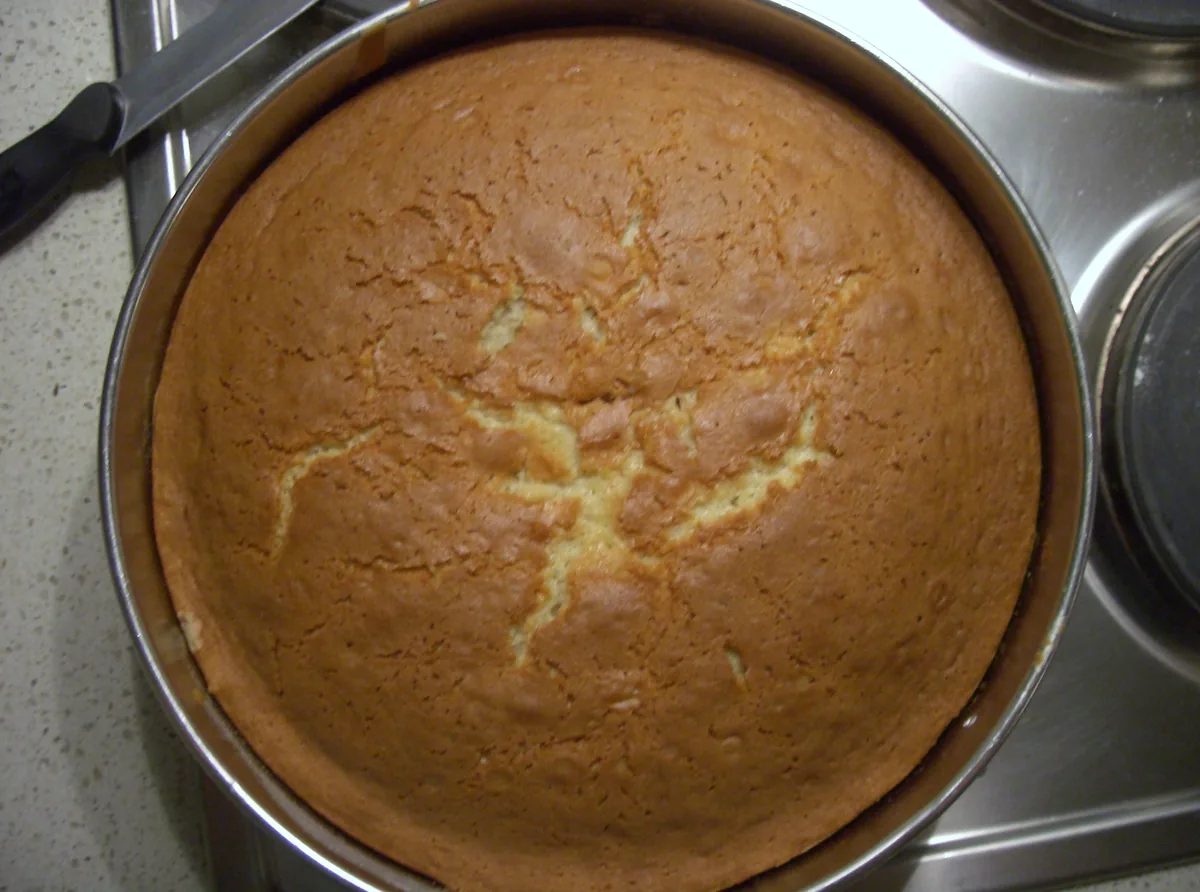
The source photograph shows a deeply browned top, and the source notes the cake's high sugar content. Browning alone does not show that the middle is baked. Check spring-back and a skewer near the centre from about 45 minutes onward.
Recipe source and licence
Adapted by AI Love Food from Cookbook:1-2-3-4 Cake by Wikibooks contributors (contributor history). This adapted recipe text is available under CC BY-SA 4.0. The image is credited separately.
Adapted from Cookbook:1-2-3-4 Cake. Uses the source metric flour, sugar, butter and milk quantities rather than its inconsistent cup conversions. Specifies large eggs, ¼ teaspoon salt, a deep 25 cm round tin and a 10-slice yield. Adds mixing, fill-level, doneness and cooling guidance. Adapted recipe text is CC BY-SA 4.0. The photograph is separately licensed under CC BY-SA 2.5.