Dessert · Australian
Golden Syrup Oat and Coconut Biscuits
Golden syrup oat and coconut biscuits with a 25-biscuit yield, clear 250 ml cup measures, shaping and binding cues, tray-spacing guidance and cooling tips.
- Prep
- 15 min
- Cook
- 20 min
- Total
- 35 min
- Serves
- 25 biscuits
Cook it
Method
Heat a conventional oven to 150°C (300°F). Line two large baking trays with baking paper. If your oven cannot bake both evenly together, bake in batches and allow additional time.
Measure the flour, sugar, oats and coconut into a large bowl. Use level 250 ml cups and stir the dry ingredients until evenly combined.
Melt the butter and golden syrup gently in a saucepan. Remove from the heat. Stir the baking soda into the water, then stir this into the warm butter mixture, leaving room for foaming.
Pour the warm mixture into the dry ingredients and stir until no dry flour remains. Press a small portion together; it should hold its shape. If it is too crumbly, add water a teaspoon at a time, mixing after each addition.
Divide into 25 similar portions. Roll or press into balls, set them on the trays with at least 5 cm between them, and flatten lightly. Consistent thickness helps the biscuits bake evenly.
Bake for about 20 minutes, until golden with set edges. Rotate the trays if they brown unevenly. The centres may still be soft when hot; do not wait for them to become completely hard in the oven.
Leave on the trays for 5–10 minutes, then transfer carefully to a rack to cool. Cooling time and any extra baking batches are additional to the 35-minute preparation and baking estimate.
Make it work
Useful substitutions
- Brown sugar can replace white sugar at the same cup volume for a darker flavour and colour. Keep the cup level and use the same measuring method.
- Use rolled oats for the stated texture. Instant oats may absorb liquid differently; steel-cut oats are not a direct substitute.
- Golden syrup gives the intended flavour. Honey changes flavour and browning, so watch the tray closely if using the source’s honey variation. Do not serve honey or biscuits made with honey to children under 12 months.
Keep it well
Storage and reheating
- Cool the biscuits completely on a rack before putting them into a container. Sealing them while warm traps steam and softens the surface.
- Keep fully cooled biscuits in a well-sealed container. For longer storage, freeze them well wrapped, then thaw only the amount needed before resealing the rest.
Recipe notes
Sources and cooking notes
Allow extra cooling time before serving. Use level 250 ml measuring cups for the dry ingredients, and leave room between biscuits for spreading.
- Cookbook:Anzac Biscuits I — Source ingredient formula and baking method.
- AI Love Food editorial methodology — Specified equipment, measurements, preparation cues and cooling guidance.
- FDA: Handling flour safely — Avoid eating raw flour dough or batter and clean preparation surfaces.
- CDC: Foods and Drinks to Avoid or Limit — Honey should not be given to children younger than 12 months because it can cause infant botulism.
Cooking tips and troubleshooting
Use the stated measuring cup
A cup is a volume measure here, not a drinking mug. This adaptation specifies 250 ml cups and 15 ml tablespoons so the formula is repeatable. Keep flour loose, spoon it into the cup and level the top rather than packing it down.
Soft hot biscuits are normal
Butter-rich biscuits firm as they cool. Moving them immediately can break them, while baking until rigid can make the finished biscuits too hard. Look for golden colour and set edges, then let the tray support them during the first few minutes of cooling.
Photo variation
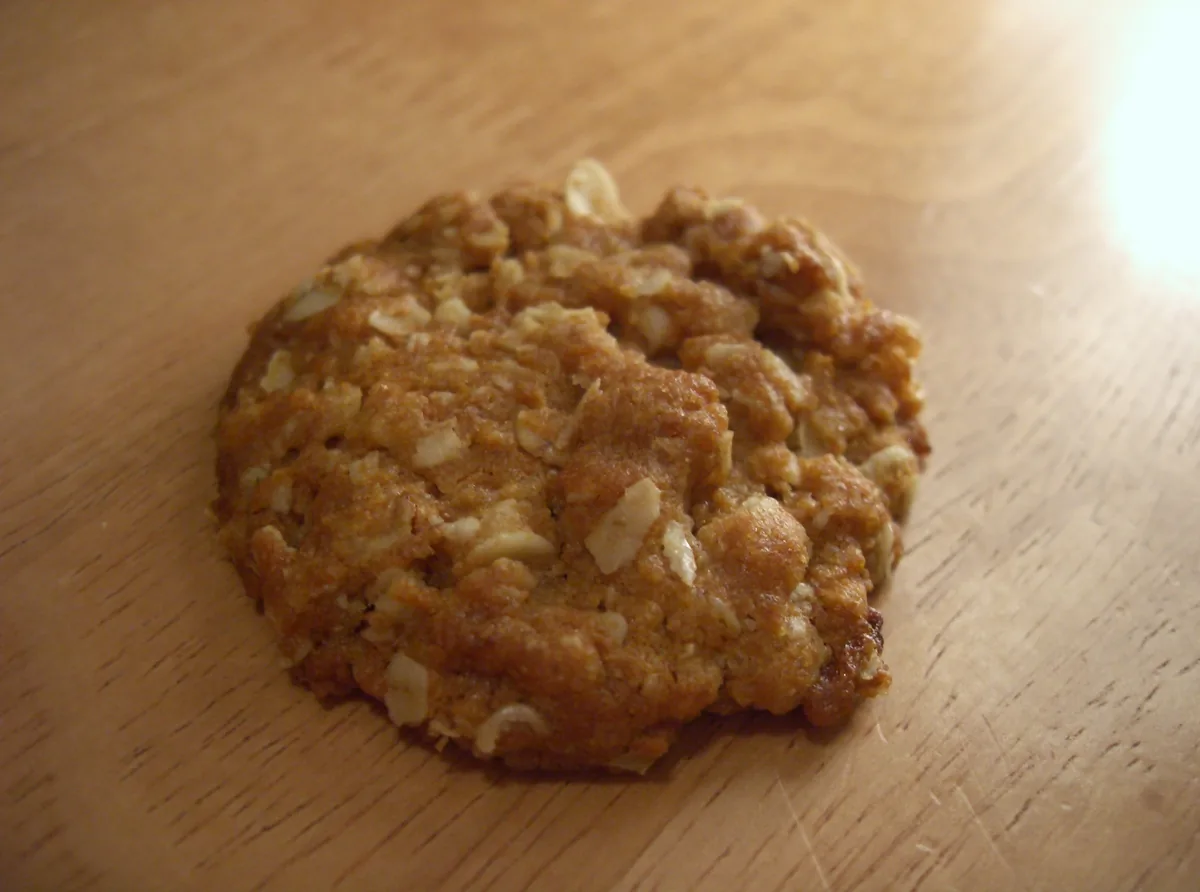
The credited source photo shows a biscuit made without coconut. This recipe includes desiccated coconut, so its surface and texture may look different.
Scale by trays as well as quantities
The calculator changes ingredient amounts. Keep individual biscuit size and spacing similar when scaling; use more trays or batches rather than packing extra dough onto one tray.
If the mixture will not hold together
Press a small handful firmly before adding more water. If it still falls apart, add only 5 ml (1 teaspoon) water at a time and mix again. Too much extra water can increase spreading and change the finished texture.
Keep the tray spacing even
Use at least 5 cm between flattened portions and avoid crowding the tray. Similar portion size, thickness and spacing give more consistent browning than trying to fit the whole batch onto one tray.
Recipe source and licence
Adapted by AI Love Food from Cookbook:Anzac Biscuits I by Wikibooks contributors (contributor history). This adapted recipe text is available under CC BY-SA 4.0. The image is credited separately.
Adapted from Cookbook:Anzac Biscuits I. Keeps the source flour, sugar, oat, coconut and butter quantities, 25-biscuit yield and 150°C bake. Specifies 250 ml cups and 15 ml tablespoons, selects golden syrup and rolled oats, and adds shaping, cooling and batch guidance. Does not adopt historical or long-storage claims. Adapted recipe text is CC BY-SA 4.0. The photograph is separately licensed under CC BY-SA 2.5.